FoldIt - Solve Puzzles for Science!

Sunday, July 12, 2015

Science has led to a lot of progress , not only in terms of scientific knowledge but also in terms of how that information and knowledge is acquired! For all the video gamers slash science lovers, there is a perfect game for you - FoldIt. It is an online puzzle game which lets you get familiar with the protein folding problem.  University of Washington's Center for Game Science in collaboration with the UW Department of Biochemistry have developed this game as a part of experimental research. 

The objective of this game is to fold the given set of protein in a stable configuration so that none of the chains are clashing, there are no voids, and all hydrogen bonds are being sufficed, using various tools provided within the game. The highest scoring solutions of each of the difficult levels ae analyzed by researchers to find whether such structural confirmation exists in the native state in the real world! 

The beta version was released to public in May 2008 and has 240,000 registered players as per the source. Since 2008, the Foldit project has participated in Critical Assessment of Techniques for Protein Structure Prediction (CASP) experiments. CASP is an international experiment for protein structure prediction taking place every two years since 1994, which helps scientists to assess the efficacy of the protein folding predictions!


There have been quite a few remarkable accomplishments by FoldIt users. One of the most important one being deciphering the crystal structure of the Mason-Pfizer monkey virus (M-PMV) retroviral protease, an AIDS-causing monkey virus and producing an accurate 3D model of the enzyme in just 10 days of release the puzzle in 2011. This problem had been bothering scientists for over 15 years! This was published in Nature Structural & Molecular Biology in 2011 (link of the published study).

The other accomplishment was regarding an enzyme which catalyses the Diels-Alder reactions widely used in synthetic chemistry. A team including David Baker in the Center for Game Science at University of Washington in Seattle computationally designed this enzyme. However, the enzyme still required improvement for potency which was done by FoldIt players by adding 13 amino acids. This increased the enzyme's activity by more than 18 times, thus, making it potent! This was published in Nature Biotechnology in 2012 (link of the published study).

If you are good at video games too or folding proteins, you may try the game too - Link. There are many tutorials and videos also available to help you get started! You never know, you might be lucky enough to decode a protein which helps find the cure to another disease!

Image source: All images have been taken from FoldIt website!
Read more ...

Science Fact - 21

Sunday, November 2, 2014
Some facts about human hair:

  1. On an average, people have between 100,000 and 150,000 hairs on their head.
  2. Categorically, blondes have an average of 140,000 strands, brunettes of 108,000 and redheads of 90,000.
  3. Hair grows at a rate of about 150mm a year.
  4. The number of strands normally lost in a day varies, but on average is 100.
  5. Each individual hair lasts for two to six years before it falls out.
  6. If you are nervous that you are losing an excessive amount of hair per day, you can try this trick
Take about 60 hairs between your fingers and pull, running your fingers through your hair.  Usually between 5 and 8 hairs will come out—this is normal. An excess of 15 hairs, however, is not as common and means you are losing more hair than you should be.
Read more ...

Science Fact - 20

Tuesday, September 30, 2014


The word 'robot' was introduced by the Czech interwar writer Karel Čapek in his play R.U.R. (Rossum's Universal Robots) in 1920.

However, Karel Čapek did not coin the word for the play, his brother did! Karel wrote a letter to the Oxford English Dictionary in which he named his brother, the painter and writer Josef Čapek, as its actual originator.

In an article in the Czech journal Lidové noviny in 1933, he explained that he had originally wanted to call the creatures laboři ("workers", from Latin labor). However, he did not like the word, and sought advice from his brother Josef, who suggested roboti. The word robota literally means corvée, serf labor, and figuratively drudgery or hard work in Czech. It also means work and labor in many Slavic languages (e.g.: Bulgarian, Russian, Serbian, Slovak, Polish, Macedonian, Ukrainian, archaic Czech). 


Read more ...

3D Printed Ice-Cream: Ready in 15 minutes

Sunday, July 20, 2014

Ever wanted to have an ice-cream which is unique in shape than all others? Now your dream can be coming true! 

Three students from Massachusetts Institute of Technology (MIT) have developed a 3-D printer which can produce an ice-cream in any desired shape in just 15 minutes. By hacking together a soft serve ice cream maker, a freezer and a 3D printer, Kyle Hounsell, Kristine Bunker, and David Donghyun Kim created a machine that extrudes soft ice cream into any given shape then quickly freezes it with a blast of liquid nitrogen. 

The trio first needed to print into a cooled environment so that the ice cream would hold its shape once printed. "We bought a small upright freezer which was large enough to both put the Solidoodle inside and allow for the full build volume we were aiming for," Kyle Hounsell said. 

Source: Google Images
They then needed a gas to solidify the ice cream as soon as it came out of the extruder. They built a system to spray liquid nitrogen onto the ice cream as it was extruded."To ensure that the extruded ice cream ended up with constant characteristics, the cryogen line was bent in a circle to go all the way around the extruder and spray the liquid nitrogen evenly around the printed ice cream," they said.

Source: Google Images

"We were inspired to design this printer because we wanted to make something fun with this up and coming technology in a way that we could grab the attention of kids. We felt that it was just as important to come up with a new technology as it was to interest the younger generation in pursuing science and technology so we can continue pushing the limits of what is possible," Bunker told 3ders.org.

It's interesting to see the research focussed on generating interest in the younger generation as well. Hope we get to see these in ice-cream parlors soon!
Read more ...

India Ranks 155 out of 178 Countries in Environment!

Thursday, January 30, 2014
India has ranked 155 out of 178 countries in Environmental Performance Index 2014. The 2014 Environmental Performance Index is a joint project between the Yale Center for Environmental Law & Policy (YCELP) and the Center for International Earth Science Information Network (CIESIN) at Columbia University, in collaboration with the World Economic Forum and support from the Samuel Family Foundation and the McCall MacBain Foundation.

What is EPI Rank?
The Environmental Performance Index (EPI) ranks how well countries perform on high-priority environmental issues in two broad policy areas: protection of human health from environmental harm and protection of ecosystems. Within these two policy objectives the EPI scores country performance in nine issue areas comprised of 20 indicators. Indicators in the EPI measure how close countries are to meeting internationally established targets or, in the absence of agreed targets, how they compare to the range of observed countries.


What are these Indicators?
These two objectives, Environmental Health and Ecosystem Vitality, are divided into nine issue categories that span high-priority environmental policy issues, including air quality, forests, fisheries, and climate and energy, among others. Underlying the nine issue categories are 20 indicators calculated from country-level data and statistics.


India's performance in these Indicators
India's performance in these indicators is below average but below is an image from their website which shows the trend as compared to last decade in each of the parameters. The health impacts and agriculture have increased as compared to last decade slightly but the major increase India has shown is in Water & Sanitation.


  1. Environmental Health

Health Impacts - India's Rank 127 
Health Impacts measures the probability of death between a child’s first and fifth birthdays. During this time, causes of death are strongly influenced by environmental factors, including air pollution, airborne particulates, and lack of access to clean drinking water. The probability of child mortality has decreased from 0.04 in 1990 to 0.01 in 2012 and thus our rank has improved which is a positive start. This shows that the health facilities in India have improved in the last decade. However, we still rank 127 in this indicator which should be improved. 
Health Impacts

Air Quality - India's Rank 174
Air Quality measures population-weighted exposure to fine particulate matter and percentage of the population burning solid fuel for cooking. It is a issue which has 3 parameters under it.
  1. Average Exposure to PM2.5 - The average exposure to PM2.5 value has increased from 19.83 to 31.98 in the last decade.  There has been a 40% decrement due to higher exposure of people to PM2.5.
  2. PM2.5 Exceedance - The score India has got is 0 out of 100! that's a shame! The value of PM2.5 exceedance has increased from 0.45 to 0.71 and it shows a 100% decrement due to high exceedances in the PM2.5 concentrations in the ambient atmosphere.
  3. Household Air Quality – Indoor Solid Fuel Usage - It measures the percentage of the population burning solid fuel (biomass such as wood, crop residues, dung, charcoal and coal) for cooking. Its value  has decreased from 87 in 1990 to 58 in 2010. There has been a 32.91% improvement in the last decade in this parameter. This shows people are moving to more refined products which are less polluting in nature.
Air Quality

Water and Sanitation - India's Rank 124
Water and Sanitation tracks percentage of population with access to improved drinking water sources and improved sanitation, including pit latrines and toilets. This index has shown an improvement of 54% in the last decade which is a tremendous achievement for our country.

This category includes two indicators: 
  1. Access to Drinking Water- This parameter takes into account the percentage of people who have access to safe drinking water. This has increased from 70.3 to 91.63 since 1990 which shows the accessibility of people to safe drinking water is increasing.
  2. Access to Sanitation - This parameter takes into account the percentage of people who have access to safe and secure means of sanitation. Our score in this is 6.2 out of 100 which is tremendously low, however there has been a 68% increment in the score in the last decade.
These indicators show that our water and sanitation problems are decreasing, however we have a long way to go. 

Water & Sanitation

2. Ecosystem Vitality
The parameters in Ecosystem Vitality include Water Resources, Agriculture, Forests, Fisheries, Biodiversity and Habitat, and Climate and Energy. Out of all these, only Agriculture has shown some improvement in these years. Agricultural subsidies and pesticide regulations have been imposed to a certain extent which is really important for a country like India as the main occupation here is agriculture.
Agriculture

In rest of the parameters, we have a long way to go to. Our environmental health is on an increase, so now we need to focus on ecosystem vitality. Climate, Forests, Biodiversity also need to be preserved for a better functioning of our ecosystem. In energy sector, we have shown improvement in the access to electricity by making it accessible even in remote areas. 
The following figure shows are performance in these rest of the parameters:
Ecosystem Vitality Indicators
155 out of 178! We surely need to work a lot harder to improve our Environmental Performance Index! 
All the data has been collected from EPI's website: http://epi.yale.edu/epi
Read more ...

Highlights in Science in 2013

Tuesday, December 31, 2013
1. Exoplanets
  • A study by Caltech astronomers reported that the Milky Way Galaxy contains at least one planet per star, resulting in approximately 100–400 billion exoplanets. 
  • Astronomers at the Harvard-Smithsonian Center for Astrophysics (CfA) reported that "at least 17 billion" Earth-sized exoplanets are estimated to reside in the Milky Way Galaxy.
  • Astronomers affiliated with the Kepler space observatory announced the discovery of KOI-172.02, an Earth-like exoplanet candidate which orbits a star similar to the Sun in the habitable zone, and is possibly a "prime candidate to host alien life".
  • NASA reports the discovery of Kepler-37b, the smallest exoplanet yet known, around the size of Earth's Moon.
  • NASA announces the discovery of three new Earthlike exoplanets – Kepler-62e, Kepler-62f, and Kepler-69c – in the habitable zones of their respective host stars, Kepler-62 and Kepler-69. The new exoplanets, which are considered prime candidates for possessing liquid water and thus potentially life, were identified using the Kepler spacecraft.
  • For the first time, astronomers determined the true colour of a distant exoplanet. HD 189733 b, a searing-hot gas giant, is said to be a vivid blue colour, most likely due to clouds of silica in its atmosphere.
  • Astronomers have discovered the 1,000th known exoplanet.
  • The Hubble Space Telescope has found evidence of water in the atmospheres of five distant exoplanets: HD 209458b, XO-1b, WASP-12b, WASP-17b and WASP-19b.

2. Cancer and its Therapy


  • January - Medical researchers state that sickle cells can be induced to attack treatment-resistant tumours by starving them of blood.
  • February - Medical researchers developed a new method of efficiently detecting cancer using bioelectric signals. In addition, they were able to manipulate cellular electric charge levels to prevent certain cells from developing cancer.
  • A genetically engineered strain of the vaccinia virus was found to triple the average survival time of patients suffering from a severe form of liver cancer.
  • March - Chinese and Israeli scientists developed a Breathalyzer-style breath test that can quickly and easily diagnose stomach cancer by analyzing exhaled chemicals, without the need for an intrusive endoscopy.
  • Scientists announced they can now illuminate up to 100 biomarkers, ten times more than the previous standard. This breakthrough may make it much easier to spot proteins in cancer cells – a vital diagnostic technique
  • Scientists discovered mutations in 26 genes that are believed to be responsible for oesophageal cancer, a breakthrough that could lead to new drug treatments for the disease.
  • April - British researchers discovered that a mutation of the gene BRCA2 increases both the risk and severity of prostate cancer in men, as well as being linked to hereditary breast cancer in women.
  • June - American researchers identified a key embryonic protein that, though usually deactivated shortly after birth, is reactivated in patients with advanced cancer. This breakthrough may allow for better treatment of advanced cancer cases, which typically respond poorly to currently available therapies. As a result of this discovery, scientists may be able to determine from the structure of the protein the fundamental process through which cancer cells seek out new tumor sites and create secondary tumors after leaving the primary tumor site.
  • July - British medical researchers created an "intelligent" surgical knife with a built-in mass spectrometer that can detect cancerous tissue during operations, allowing surgeons to more accurately and effectively excise tumors without damaging healthy tissue

3. 3D Printing


  • January – The first museum of 3D-printed artifacts opens in China.
  • January – Architects begin preparations for constructing the world's first 3D-printed building. The building will be constructed of a high-strength artificial marble laid down by an industrial-scale 3D printer, and is planned for completion in 2014.
  • February - Scientists at Scotland's Heriot-Watt University develop a 3D printer that can produce clusters of living stem cells, potentially allowing complete organs to be printed on demand in future.
  • In a series of separate developments, American and Japanese engineers create 3D printers that can produce edible meals with a range of flavours and textures on demand. These could both replace conventional ready meals and allow astronauts to enjoy a far more varied diet.
  • Cornell University scientists use a 3D printer to create a living artificial ear from collagen and ear cell cultures. In future, such ears could be grown to order for patients suffering from ear trauma or amputation.
  • March - In a world first, researchers replace 75 percent of an injured patient's skull with a precision 3D-printed polymer replacement implant. In future, damaged bones may routinely be replaced with custom-manufactured implants.
  • June- American scientists use 3D printing to manufacture a new class of microscopic batteries, which may allow the easy production of extremely small medical devices, nanorobots and communications systems.
  • July - North Carolina State University researchers demonstrate a method of 3D printing liquid metal at room temperature, forming freestanding structures which maintain their shape despite initially remaining liquid. The invention, which uses an alloy of gallium and indium, could allow electronic circuitry and even flexible wiring to be printed on demand.
  • NASA engineers successfully test a rocket engine with a fully 3D-printed injector, proving that critical rocket components can be produced through 3D printing without compromising their effectiveness.

4.Meteor and Meteorites


  • January - Scientists analysed a meteorite, NWA 7034, that was found in the Sahara Desert and purchased in Morocco in 2011, and report that it is a new type of Mars rock with an unusually high water content.
  • February - A 10-ton meteoroid impacts in Chelyabinsk, Russia, producing a powerful shockwave and injuring over 1,000 people.
  • March - At the 44th annual Lunar and Planetary Science Conference, scientists announce the discovery of the first known meteorite to originate from Mercury. The green rock, known as NWA 7325, is thought to be 4.56 billion years old.
  • May - Researches find fragments of meteorites in pieces of ancient Egyptian jewellery, which were discovered in a cemetery dating back to roughly 3,300 BC near Cairo in 1911
  • October- Russian authorities raised a large fragment, 654 kg (1,440 lb) total weight, of the Chelyabinsk meteor, a Near-Earth asteroid that entered Earth's atmosphere over Russia on 15 February 2013, from the bottom of Chebarkul lake.

5. Global Warming


  • February – Data gathered from Siberian ice caves reveals that continued global warming may lead to widespread thawing of permafrost, potentially releasing massive volumes of trapped carbon dioxide and methane into the atmosphere
  • Scientists from Oregon State University reconstruct the global temperature record since the end of the last Ice Age. Their data, taken from 73 sites around the world, shows a clear and rapid warming trend in the 20th and early 21st centuries.
  • The American Meteorological Society releases its peer-reviewed State of the Climate report, showing how the impacts of global warming are worsening.
  • August - Cooling waters in the tropical Pacific Ocean appear to be a major factor in dampening global warming in recent years, scientists say.
  • September - Long-term data shows that the Greenland Sea is warming 10 times faster than the global ocean.
  • The first document from the IPCC Fifth Assessment Report – Working Group I's summary for policymakers – is released. It states that warming of the global climate system is "unequivocal", with a 95% probability that humans are the main cause.
  • October – A new study adds weight to the idea that the oceans have absorbed some of the excess heat from recent global warming.
  • November - Even if CO2 emissions stop, global warming will continue for centuries, according to a study by Princeton University.


6. Higgs-Boson
  • The Scottish Government announces plans for a national physics prize named in honour of Peter Higgs, who first theorized the Higgs boson in 1964.
  • February – Studies of a recently discovered Higgs boson-like particle suggest that the universe may end in a false vacuum collapse billions of years from now.
  • March - CERN scientists confirm, with a very high degree of certainty, that a new particle identified by the Large Hadron Collider in July 2012 is the long-sought Higgs boson.
  • October - The Nobel Prize in Physics has been awarded to François Englert and Peter Higgs "for the theoretical discovery of a mechanism that contributes to our understanding of the origin of mass of subatomic particles, and which recently was confirmed through the discovery of the predicted fundamental particle, by the ATLAS and CMS experiments at CERN's Large Hadron Collider".

7.New technologies & Treatments


  • January - British researchers successfully cure blindness in mice using an injection of photosensitive cells which could be used to heal human sufferers of retinitis pigmentosa.
  • A gamma secretase inhibitor previously experimented for treating Alzheimer's disease is found to have regenerative effects on inner ear hair cells, potentially allowing for the effective treatment of deafness.
  • Medical researchers state that sickle cells can be induced to attack treatment-resistant tumours by starving them of blood.
  • Bolivian scientists restore brain function to stroke-affected rats by injecting them with stem cells. This breakthrough may lead to more effective treatments for human stroke sufferers.
  • February - American researchers develop a new molecular therapy which can cross the blood-brain barrier to deliver medicines to the brain, potentially helping to treat neurological diseases such as Parkinson's disease.
  • New York researchers successfully cure leukodystrophy in mice by using skin cells to repair damaged myelin sheaths. This treatment may also prove effective in curing human multiple sclerosis.
  • June - A new treatment to "reset" the immune system of multiple sclerosis patients is reported to reduce their reactivity to myelin by 50 to 75 percent.
  • July - Bone marrow transplants are found to remove all traces of HIV from two test patients, in conjunction with antiretroviral treatments.

8. Glaciers
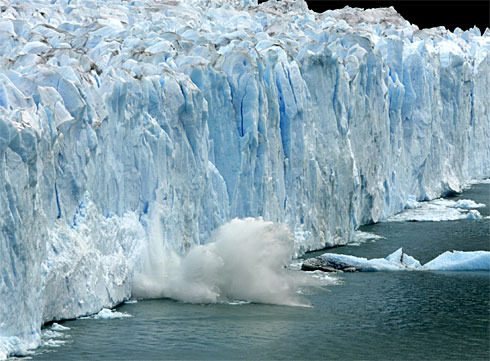
  • French glaciologists release a report stating that the glaciers of the Andes are melting at an unprecedented rate.
  • May - New evidence suggests that Mount Everest's glaciers are melting.
  • Four-hundred-year-old bryophyte specimens left behind by retreating glaciers in Canada are brought back to life in the laboratory.

9.  Graphene


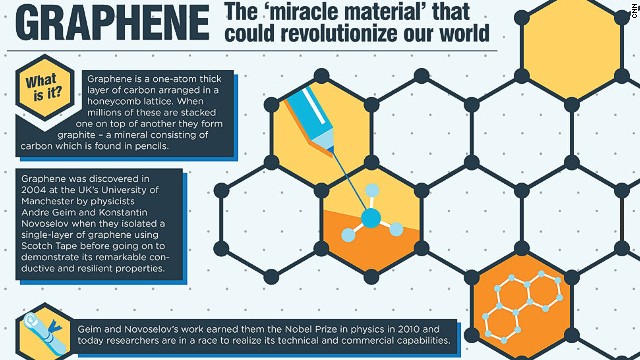
  • Stanford University physicists discover that atom-thin sheets of graphene are 100 times more chemically reactive than thicker sheets. This reactivity may be crucial to developing new practical applications for graphene, which is already widely known for its immense strength and conductivity.
  • Researchers discover that boron nitride – a nanomaterial also known as "white graphene" – is highly effective at removing harmful chemicals from polluted water, and could be used to clean up future oil spills.
  • May – The first graphene-based circuits to break the gigahertz barrier are created by researchers in the US and Italy.
  • Researchers at Nanyang Technological University invent a graphene-based sensor that is 1,000 times more sensitive to light than traditional CMOS or CCD sensors.
  • Researchers in Germany have taken a major step towards using graphene in solar cells, which could boost their efficiency. The material was found to retain its properties even when coated with silicon.

10. Hi-tech Robots


  • The British Army begins using a miniature drone helicopter in Afghanistan. The aerial surveillance robot weighs just 16 grams, and can be remotely piloted into difficult terrain to detect hidden enemy positions.
  • March – Boston Dynamics demonstrates an updated version of its BigDog military robot, a mule-sized heavy-lifting robot able to navigate rough terrain and equipped with an arm powerful enough to easily lift and throw breeze blocks.
  • Roboticists launch an online database and cloud computing platform which can be accessed by robots worldwide, allowing them to more easily recognise unfamiliar objects and perform intensive computing tasks.
  • Scientists create a robotic ant colony that behaves like a real one. The tiny machines can be programmed to avoid obstacles and find the quickest route through a network or maze.
  • A British engineer unveils a giant "mantis" robot, large enough to carry a human pilot, which is supported by multiple hydraulic legs. The robot has reportedly attracted the interest of mining and marine research companies.
  • IBM develops a robot which combines telepresence and augmented reality technologies to assist engineers working on complex projects in remote areas.
  • May – Harvard scientists unveil RoboBee, a miniature robot with the smallest ever man-made wings capable of flight.
  • Engineers demonstrate a small quadrupedal "cheetah-cub" robot, with speed and agility approaching that of a real cat. The prototype is intended as the basis for future search-and-rescue robots with vastly greater speed and agility than human emergency workers.
  • DARPA and Boston Dynamics unveil the Atlas humanoid robot, a 6-foot (1.8 m) autonomous machine capable of a wide variety of military and disaster-response operations.


Let's see what more 2014 unveils for all science-o-maniacs! Have a Sciency New Year!
Read more ...

NASA and Google join hands to grow Turnip on Moon

Wednesday, December 4, 2013

As the man's desire increases, technology is born! Well, we haven't been able to create a habitable environment for humans on Moon but we have started testing the conditions on Moon for habitable conditions by growing plants there. Growing plants is a vital step toward sustainability in a new environment. Aside from the obvious life support that vegetation would provide — air, food, and water — it would also provide another integral aspect to a habitable lunar environment. 

A statement from the office of the chief technologist at NASA Ames Research Centre said, "Plants react to aspects of a harsh environment similarly to humans, as their genetic material can be damaged by radiation. A relatively safe way to test long-term lunar exposure is to send some plants up there and monitor their health. NASA likens this to being like sending a canary into a coal mine."


Rather than making the trip and dropping the plants off itself, NASA plans to use commercial spaceflight as the vehicle by which the plants will be sent up to the moon. NASA is constructing a small, lightweight (a little over two pounds), self-sustaining habitat for the vegetation which will be delivered to the moon via the Moon Express, a lunar lander that’s part of the Google Lunar X Prize, a competition to create a robotic spacecraft that can fly to and land on the moon. 

This type of collaboration between NASA and Google for sending the habitat on Moon has shown a new way of conducting projects by minimizing costs. If it wasn't for the Google's competition, NASA would have to  spend a large amount of money on sending a mission specifically for the purpose of delivering the habitat.


Once the lander arrives on the moon, water will be added to basil, turnip, and Arabidopsis (a small flowering plant) seeds kept in the habitat, then monitored for five to 10 days and compared to controls back on Earth. NASA will also monitor the actual habitat itself, looking toward its scalability since a two-pound habitat won’t support human life. Currently, the chamber can support 10 basil seeds, 10 turnip seeds, and around 100 Arabidopsis seeds. It also holds the bit of water that initiates the germination process, and uses the natural sunlight that reaches the moon to support the plant life.

In order to study the quality of the plant growth and movement, the habitat will take images and beam them back home which will be compared with the controls at the Earth. NASA has taken an initiative to curb costs in this as well - samples of control will be distributed in schools where students will monitor the growth of the samples - thus, collecting data on a large number of control without running them themselves and also letting youth to be a part of such an innovation.


Following the Lunar Growth experiment NASA said it would send further experiments to see how plants survive through the lunar night and even would breed plants on the Moon. It said: “Survival to 14 days demonstrates plants can sprout in the Moon’s radiation environment at 1/6 g. Survival to 60 days demonstrates that sexual reproduction can occur in a lunar environment. Survival to 180 days shows effects of radiation on dominant and recessive genetic traits. Afterwards, the experiment may run for months through multiple generations, increasing science return.”

With NASA growing Lunar Salad and Mars One sending people on Mars, our kids will be visiting relatives on another planet for vacations! ;)
Read more ...