1. Exoplanets

2. Cancer and its Therapy
6. Higgs-Boson

8. Glaciers

9. Graphene
10. Hi-tech Robots

- A study by Caltech astronomers reported that the Milky Way Galaxy contains at least one planet per star, resulting in approximately 100–400 billion exoplanets.
- Astronomers at the Harvard-Smithsonian Center for Astrophysics (CfA) reported that "at least 17 billion" Earth-sized exoplanets are estimated to reside in the Milky Way Galaxy.
- Astronomers affiliated with the Kepler space observatory announced the discovery of KOI-172.02, an Earth-like exoplanet candidate which orbits a star similar to the Sun in the habitable zone, and is possibly a "prime candidate to host alien life".
- NASA reports the discovery of Kepler-37b, the smallest exoplanet yet known, around the size of Earth's Moon.
- NASA announces the discovery of three new Earthlike exoplanets – Kepler-62e, Kepler-62f, and Kepler-69c – in the habitable zones of their respective host stars, Kepler-62 and Kepler-69. The new exoplanets, which are considered prime candidates for possessing liquid water and thus potentially life, were identified using the Kepler spacecraft.
- For the first time, astronomers determined the true colour of a distant exoplanet. HD 189733 b, a searing-hot gas giant, is said to be a vivid blue colour, most likely due to clouds of silica in its atmosphere.
- Astronomers have discovered the 1,000th known exoplanet.
- The Hubble Space Telescope has found evidence of water in the atmospheres of five distant exoplanets: HD 209458b, XO-1b, WASP-12b, WASP-17b and WASP-19b.
2. Cancer and its Therapy

- January - Medical researchers state that sickle cells can be induced to attack treatment-resistant tumours by starving them of blood.
- February - Medical researchers developed a new method of efficiently detecting cancer using bioelectric signals. In addition, they were able to manipulate cellular electric charge levels to prevent certain cells from developing cancer.
- A genetically engineered strain of the vaccinia virus was found to triple the average survival time of patients suffering from a severe form of liver cancer.
- March - Chinese and Israeli scientists developed a Breathalyzer-style breath test that can quickly and easily diagnose stomach cancer by analyzing exhaled chemicals, without the need for an intrusive endoscopy.
- Scientists announced they can now illuminate up to 100 biomarkers, ten times more than the previous standard. This breakthrough may make it much easier to spot proteins in cancer cells – a vital diagnostic technique
- Scientists discovered mutations in 26 genes that are believed to be responsible for oesophageal cancer, a breakthrough that could lead to new drug treatments for the disease.
- April - British researchers discovered that a mutation of the gene BRCA2 increases both the risk and severity of prostate cancer in men, as well as being linked to hereditary breast cancer in women.
- June - American researchers identified a key embryonic protein that, though usually deactivated shortly after birth, is reactivated in patients with advanced cancer. This breakthrough may allow for better treatment of advanced cancer cases, which typically respond poorly to currently available therapies. As a result of this discovery, scientists may be able to determine from the structure of the protein the fundamental process through which cancer cells seek out new tumor sites and create secondary tumors after leaving the primary tumor site.
- July - British medical researchers created an "intelligent" surgical knife with a built-in mass spectrometer that can detect cancerous tissue during operations, allowing surgeons to more accurately and effectively excise tumors without damaging healthy tissue
3. 3D Printing

- January – The first museum of 3D-printed artifacts opens in China.
- January – Architects begin preparations for constructing the world's first 3D-printed building. The building will be constructed of a high-strength artificial marble laid down by an industrial-scale 3D printer, and is planned for completion in 2014.
- February - Scientists at Scotland's Heriot-Watt University develop a 3D printer that can produce clusters of living stem cells, potentially allowing complete organs to be printed on demand in future.
- In a series of separate developments, American and Japanese engineers create 3D printers that can produce edible meals with a range of flavours and textures on demand. These could both replace conventional ready meals and allow astronauts to enjoy a far more varied diet.
- Cornell University scientists use a 3D printer to create a living artificial ear from collagen and ear cell cultures. In future, such ears could be grown to order for patients suffering from ear trauma or amputation.
- March - In a world first, researchers replace 75 percent of an injured patient's skull with a precision 3D-printed polymer replacement implant. In future, damaged bones may routinely be replaced with custom-manufactured implants.
- June- American scientists use 3D printing to manufacture a new class of microscopic batteries, which may allow the easy production of extremely small medical devices, nanorobots and communications systems.
- July - North Carolina State University researchers demonstrate a method of 3D printing liquid metal at room temperature, forming freestanding structures which maintain their shape despite initially remaining liquid. The invention, which uses an alloy of gallium and indium, could allow electronic circuitry and even flexible wiring to be printed on demand.
- NASA engineers successfully test a rocket engine with a fully 3D-printed injector, proving that critical rocket components can be produced through 3D printing without compromising their effectiveness.
4.Meteor and Meteorites

- January - Scientists analysed a meteorite, NWA 7034, that was found in the Sahara Desert and purchased in Morocco in 2011, and report that it is a new type of Mars rock with an unusually high water content.
- February - A 10-ton meteoroid impacts in Chelyabinsk, Russia, producing a powerful shockwave and injuring over 1,000 people.
- March - At the 44th annual Lunar and Planetary Science Conference, scientists announce the discovery of the first known meteorite to originate from Mercury. The green rock, known as NWA 7325, is thought to be 4.56 billion years old.
- May - Researches find fragments of meteorites in pieces of ancient Egyptian jewellery, which were discovered in a cemetery dating back to roughly 3,300 BC near Cairo in 1911
- October- Russian authorities raised a large fragment, 654 kg (1,440 lb) total weight, of the Chelyabinsk meteor, a Near-Earth asteroid that entered Earth's atmosphere over Russia on 15 February 2013, from the bottom of Chebarkul lake.
5. Global Warming

- February – Data gathered from Siberian ice caves reveals that continued global warming may lead to widespread thawing of permafrost, potentially releasing massive volumes of trapped carbon dioxide and methane into the atmosphere
- Scientists from Oregon State University reconstruct the global temperature record since the end of the last Ice Age. Their data, taken from 73 sites around the world, shows a clear and rapid warming trend in the 20th and early 21st centuries.
- The American Meteorological Society releases its peer-reviewed State of the Climate report, showing how the impacts of global warming are worsening.
- August - Cooling waters in the tropical Pacific Ocean appear to be a major factor in dampening global warming in recent years, scientists say.
- September - Long-term data shows that the Greenland Sea is warming 10 times faster than the global ocean.
- The first document from the IPCC Fifth Assessment Report – Working Group I's summary for policymakers – is released. It states that warming of the global climate system is "unequivocal", with a 95% probability that humans are the main cause.
- October – A new study adds weight to the idea that the oceans have absorbed some of the excess heat from recent global warming.
- November - Even if CO2 emissions stop, global warming will continue for centuries, according to a study by Princeton University.

- The Scottish Government announces plans for a national physics prize named in honour of Peter Higgs, who first theorized the Higgs boson in 1964.
- February – Studies of a recently discovered Higgs boson-like particle suggest that the universe may end in a false vacuum collapse billions of years from now.
- March - CERN scientists confirm, with a very high degree of certainty, that a new particle identified by the Large Hadron Collider in July 2012 is the long-sought Higgs boson.
- October - The Nobel Prize in Physics has been awarded to François Englert and Peter Higgs "for the theoretical discovery of a mechanism that contributes to our understanding of the origin of mass of subatomic particles, and which recently was confirmed through the discovery of the predicted fundamental particle, by the ATLAS and CMS experiments at CERN's Large Hadron Collider".
7.New technologies & Treatments

- January - British researchers successfully cure blindness in mice using an injection of photosensitive cells which could be used to heal human sufferers of retinitis pigmentosa.
- A gamma secretase inhibitor previously experimented for treating Alzheimer's disease is found to have regenerative effects on inner ear hair cells, potentially allowing for the effective treatment of deafness.
- Medical researchers state that sickle cells can be induced to attack treatment-resistant tumours by starving them of blood.
- Bolivian scientists restore brain function to stroke-affected rats by injecting them with stem cells. This breakthrough may lead to more effective treatments for human stroke sufferers.
- February - American researchers develop a new molecular therapy which can cross the blood-brain barrier to deliver medicines to the brain, potentially helping to treat neurological diseases such as Parkinson's disease.
- New York researchers successfully cure leukodystrophy in mice by using skin cells to repair damaged myelin sheaths. This treatment may also prove effective in curing human multiple sclerosis.
- June - A new treatment to "reset" the immune system of multiple sclerosis patients is reported to reduce their reactivity to myelin by 50 to 75 percent.
- July - Bone marrow transplants are found to remove all traces of HIV from two test patients, in conjunction with antiretroviral treatments.
8. Glaciers
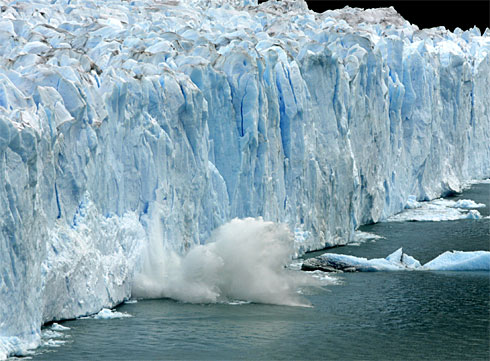
- French glaciologists release a report stating that the glaciers of the Andes are melting at an unprecedented rate.
- May - New evidence suggests that Mount Everest's glaciers are melting.
- Four-hundred-year-old bryophyte specimens left behind by retreating glaciers in Canada are brought back to life in the laboratory.
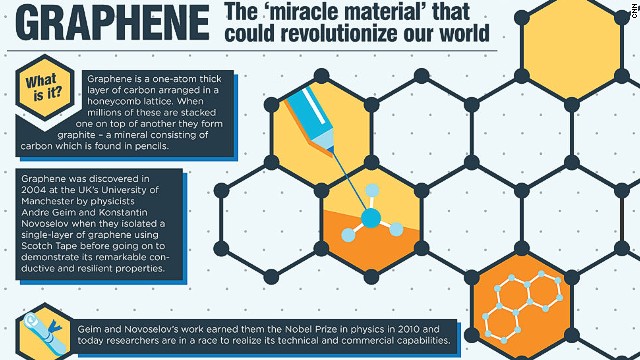
- Stanford University physicists discover that atom-thin sheets of graphene are 100 times more chemically reactive than thicker sheets. This reactivity may be crucial to developing new practical applications for graphene, which is already widely known for its immense strength and conductivity.
- Researchers discover that boron nitride – a nanomaterial also known as "white graphene" – is highly effective at removing harmful chemicals from polluted water, and could be used to clean up future oil spills.
- May – The first graphene-based circuits to break the gigahertz barrier are created by researchers in the US and Italy.
- Researchers at Nanyang Technological University invent a graphene-based sensor that is 1,000 times more sensitive to light than traditional CMOS or CCD sensors.
- Researchers in Germany have taken a major step towards using graphene in solar cells, which could boost their efficiency. The material was found to retain its properties even when coated with silicon.
10. Hi-tech Robots

- The British Army begins using a miniature drone helicopter in Afghanistan. The aerial surveillance robot weighs just 16 grams, and can be remotely piloted into difficult terrain to detect hidden enemy positions.
- March – Boston Dynamics demonstrates an updated version of its BigDog military robot, a mule-sized heavy-lifting robot able to navigate rough terrain and equipped with an arm powerful enough to easily lift and throw breeze blocks.
- Roboticists launch an online database and cloud computing platform which can be accessed by robots worldwide, allowing them to more easily recognise unfamiliar objects and perform intensive computing tasks.
- Scientists create a robotic ant colony that behaves like a real one. The tiny machines can be programmed to avoid obstacles and find the quickest route through a network or maze.
- A British engineer unveils a giant "mantis" robot, large enough to carry a human pilot, which is supported by multiple hydraulic legs. The robot has reportedly attracted the interest of mining and marine research companies.
- IBM develops a robot which combines telepresence and augmented reality technologies to assist engineers working on complex projects in remote areas.
- May – Harvard scientists unveil RoboBee, a miniature robot with the smallest ever man-made wings capable of flight.
- Engineers demonstrate a small quadrupedal "cheetah-cub" robot, with speed and agility approaching that of a real cat. The prototype is intended as the basis for future search-and-rescue robots with vastly greater speed and agility than human emergency workers.
- DARPA and Boston Dynamics unveil the Atlas humanoid robot, a 6-foot (1.8 m) autonomous machine capable of a wide variety of military and disaster-response operations.
Let's see what more 2014 unveils for all science-o-maniacs! Have a Sciency New Year!


