5 Fantastico Inventions of 2015!

Monday, January 25, 2016
Source: Francis Moran
The year of 2015 has been a really productive year in terms of fun and cool inventions aimed at public usage. There have been many which I really liked but here's a list of 5 fantastico inventions of 2015 for you:

1. The Ears that Hear!
Have you ever stood in a train with a very loud person talking on phone or been in a mall with a baby crying endlessly and wondered if you could mute that particular noise? Well now you can with Doppler Labs Here Active Listening Earbuds which help you select the frequencies you want to filter out or reduce the volume for. The earbuds are linked to your smart phone and you can select the particular noises which you want to filter out! Doppler Labs CEO Noah Kraft called it “augmented audio reality.”
I can think of a few people I would like to filter out! ;) 


2. The Intelligent Pan!
For all the naive cooks out there, there's a technology that lets you cook food without burning it! It's a simple application- you select a recipe from your smartphone, using bluetooth the pan will get the instructions. Based on a heat sensor, the pan will let you know when you need to flip the dish! The concept is by MIT graduates Humberto Evans and Mike Robbins - Pantelligent.
No more burned food for me atleast!


3. The Drinkable Book
Considering the large number of people who do not have access to clean drinking water, Teri Dankovich has created The Drinkable Book whose pages double as water filters when in contact with water. In tests conducted in Bangladesh, Ghana and South Africa, they were able to kill over 99% bacteria. More tests need to be conducted for other harmful contaminants, but if it is successful, it will be a great invention for providing clean drinking water to people. 
Its pages also have instructions manual on them. 


4. The Wonder Car
Tesla has launched their first luxury electric SUV which can go 250 miles on a single charge. It has a capacity of 7 people with a low centre of gravity provided by its battery. The Model X goes from 0 to 96 km/h in 3.2 seconds. This car has both awesome features of a cool car plus cleaner emissions due to the electric charging for batteries!
Vrooooooooom! :)


5. The Hoverboard Scooter
All of you must have seen the hoverboard scooter being used by the celebrities these days! This is the coolest invention which is like a hybrid between segway and skates! The Hoverboard Scooter uses electric gyroscopes to maintain balance by adjusting their body weight. 
This might be the new mode of transportation for kids to school!

So did your favourite invention make it to our list? Please let me know in the comments! :)


This blog post is inspired by the blogging marathon hosted on IndiBlogger for the launch of the #Fantastico Zica from Tata Motors. You can apply for a test drive of the hatchback Zica today.
Read more ...

3D Printed Ice-Cream: Ready in 15 minutes

Sunday, July 20, 2014

Ever wanted to have an ice-cream which is unique in shape than all others? Now your dream can be coming true! 

Three students from Massachusetts Institute of Technology (MIT) have developed a 3-D printer which can produce an ice-cream in any desired shape in just 15 minutes. By hacking together a soft serve ice cream maker, a freezer and a 3D printer, Kyle Hounsell, Kristine Bunker, and David Donghyun Kim created a machine that extrudes soft ice cream into any given shape then quickly freezes it with a blast of liquid nitrogen. 

The trio first needed to print into a cooled environment so that the ice cream would hold its shape once printed. "We bought a small upright freezer which was large enough to both put the Solidoodle inside and allow for the full build volume we were aiming for," Kyle Hounsell said. 

Source: Google Images
They then needed a gas to solidify the ice cream as soon as it came out of the extruder. They built a system to spray liquid nitrogen onto the ice cream as it was extruded."To ensure that the extruded ice cream ended up with constant characteristics, the cryogen line was bent in a circle to go all the way around the extruder and spray the liquid nitrogen evenly around the printed ice cream," they said.

Source: Google Images

"We were inspired to design this printer because we wanted to make something fun with this up and coming technology in a way that we could grab the attention of kids. We felt that it was just as important to come up with a new technology as it was to interest the younger generation in pursuing science and technology so we can continue pushing the limits of what is possible," Bunker told 3ders.org.

It's interesting to see the research focussed on generating interest in the younger generation as well. Hope we get to see these in ice-cream parlors soon!
Read more ...

NASA and Google join hands to grow Turnip on Moon

Wednesday, December 4, 2013

As the man's desire increases, technology is born! Well, we haven't been able to create a habitable environment for humans on Moon but we have started testing the conditions on Moon for habitable conditions by growing plants there. Growing plants is a vital step toward sustainability in a new environment. Aside from the obvious life support that vegetation would provide — air, food, and water — it would also provide another integral aspect to a habitable lunar environment. 

A statement from the office of the chief technologist at NASA Ames Research Centre said, "Plants react to aspects of a harsh environment similarly to humans, as their genetic material can be damaged by radiation. A relatively safe way to test long-term lunar exposure is to send some plants up there and monitor their health. NASA likens this to being like sending a canary into a coal mine."


Rather than making the trip and dropping the plants off itself, NASA plans to use commercial spaceflight as the vehicle by which the plants will be sent up to the moon. NASA is constructing a small, lightweight (a little over two pounds), self-sustaining habitat for the vegetation which will be delivered to the moon via the Moon Express, a lunar lander that’s part of the Google Lunar X Prize, a competition to create a robotic spacecraft that can fly to and land on the moon. 

This type of collaboration between NASA and Google for sending the habitat on Moon has shown a new way of conducting projects by minimizing costs. If it wasn't for the Google's competition, NASA would have to  spend a large amount of money on sending a mission specifically for the purpose of delivering the habitat.


Once the lander arrives on the moon, water will be added to basil, turnip, and Arabidopsis (a small flowering plant) seeds kept in the habitat, then monitored for five to 10 days and compared to controls back on Earth. NASA will also monitor the actual habitat itself, looking toward its scalability since a two-pound habitat won’t support human life. Currently, the chamber can support 10 basil seeds, 10 turnip seeds, and around 100 Arabidopsis seeds. It also holds the bit of water that initiates the germination process, and uses the natural sunlight that reaches the moon to support the plant life.

In order to study the quality of the plant growth and movement, the habitat will take images and beam them back home which will be compared with the controls at the Earth. NASA has taken an initiative to curb costs in this as well - samples of control will be distributed in schools where students will monitor the growth of the samples - thus, collecting data on a large number of control without running them themselves and also letting youth to be a part of such an innovation.


Following the Lunar Growth experiment NASA said it would send further experiments to see how plants survive through the lunar night and even would breed plants on the Moon. It said: “Survival to 14 days demonstrates plants can sprout in the Moon’s radiation environment at 1/6 g. Survival to 60 days demonstrates that sexual reproduction can occur in a lunar environment. Survival to 180 days shows effects of radiation on dominant and recessive genetic traits. Afterwards, the experiment may run for months through multiple generations, increasing science return.”

With NASA growing Lunar Salad and Mars One sending people on Mars, our kids will be visiting relatives on another planet for vacations! ;)
Read more ...

Projection of Climate Departure: Assessing Climate Change

Sunday, October 13, 2013


Scientists at University of Hawai have projected the timing of climate departure from the present variabilities. First of all, let me explain to you what this means. The climate is changing at a very slow pace , thus the changes in ecological and social parameters due to climate change are extremely less when considered for a small time scale. However, when viewed at a large time scale, they appear to have changed a lot as does the climate. So, the scientists have tried to project/predict the time period till which the climate will change to such extremes which has not occurred in last 145 years. 

They presented an index for the time when the projected mean climate of a given location moves to a state continuously outside the bounds of historical variability under alternative greenhouse gas emissions scenarios. The historical variabilities they have considered in this study are from 1860 to 2005. So, the temperature conditions being assessed for a city when it hits the "climate departure" are such that the average temperature of the city's coolest year from then on is projected to be warmer than the average temperature of its hottest year between 1860 and 2005. 

This index has a global mean of 2069 (±18 years s.d.) for near-surface air temperature under an emissions stabilization scenario and 2047 (±14 years s.d.) under a ‘business-as-usual’ scenario. This means that if we stabilize the emissions, the climate departure for near-surface air temperature will occur in 2069, that is, 56 years from now (solid blue line in fig c); and in the case of continuing emissions at our present rate (which will increase with time) with no additional boundations on emissions, the climate departure will occur in 2047, that is, 34 years from now (solid red line in fig c).

a, b, Projected year when annual (a) or monthly (b) air temperature means move to a state continuously outside annual or monthly historical bounds, respectively.c, Absolute change in mean annual air temperature. (Results in a–c are based on RCP85.) d, Cumulative frequency of 100-km grid cells according to the projected timing of climate departure from recent variability for air temperature under two emissions scenarios (vertical lines indicate the median year). e, Scatter plot relating the grid cells from the map of absolute change (c) to the same grid cells from the map of projected timing of climate departure (a).
Source: 
http://www.nature.com/nature/journal/v502/n7470/full/nature12540.html
They also found out that the unprecedented climates will occur earliest in the tropics and among low-income countries, highlighting the vulnerability of global biodiversity and the limited governmental capacity to respond to the impacts of climate change. The study states, "The fact that the earliest climate departures occur in low-income countries further highlights an obvious disparity between those who benefit economically from the processes leading to climate change and those who will have to pay for most of the environmental and social costs."

They also emphasised on the emission control measures required by the developed countries as, "This suggests that any progress to decrease the rate of ongoing climate change will require a bigger commitment from developed countries to decrease their emissions but will also require more extensive funding of social and conservation programmes in developing countries to minimize the impacts of climate change."

Their study is of significance in terms of the urgency of mitigating greenhouse gas emissions if widespread changes in global biodiversity and human societies are to be prevented. 

Following is the image representing the year of climate departure of various cities for both emissions control measures scenario and business-as-usual scenario.

Climate Departure with carbon dioxide mitigation
Source: The Washington Post
Climate Departure without carbon dioxide mitigation
Source: The Washington Post

One of our Indian cities, Mumbai, as predicted will have a climate departure in 2034 (approx 20 years from now) without carbon dioxide emissions mitigation and 2051 with mitigation.


Read more ...

Solar Flip

Monday, October 7, 2013


Our Sun is about to flip! Yeah that's right but it doesn't mean that we need to flip out! The magnetic poles of the Sun are about to flip, that is, the North pole will become the South pole and vice versa. According to scientists at the Wilcox Solar Observatory at Stanford University , the Sun could be barely two to three months away from this magnetic field reversal. 

What does it mean?
The solar dynamo is the physical process that generates the Sun's magnetic field. The Sun is permeated by an overall dipole magnetic field, as are many other celestial bodies such as the Earth. It means that just like our earth has a magnetic field and thus, North and South poles, in a similar way Sun also has a giant magnet inside it with North and South poles. So we can think of the sun as a large N-S magnet, like our Earth, but with smaller variously oriented and continually evolving mini-magnets distributed over its photosphere (visible surface) and throughout its corona (extended atmosphere).

How does it flip?
Solar magnetic reversals occur close to solar maximum, when the number of sunspots is near its peak, though it is often a gradual process, taking up to 18 months. Indeed, as is the case now, one pole often lags the other by some months. Currently, the sun has two positive magnetic poles! "The sun's north pole has already changed sign, while the south pole is racing to catch up," says Scherrer. "Soon, however, both poles will be reversed, and the second half of Solar Max will be underway."

The reversal will probably be complete within the next one or two months. It happens at the peak of each solar cycle as the sun's inner magnetic dynamo re-organizes itself. The coming reversal will mark the midpoint of Solar Cycle 24. Half of 'Solar Max' will be behind us, with half yet to come.

The Sun's large scale magnetic field flips over on a regular basis, roughly every 11 years. Actually, Earth's flips too, very irregularly. The last time was 780,000 years ago. (PhysOrg)

Will it affect us?
Dibyendu Nandi, an astrophysicist at Kolkata's Indian Institute of Science Education and Research said, "The weather in space is expected to be most hazardous in the next few months as the flip begins to take place. The chances of solar magnetic storms occurring are also high. These storms carry a vast amount of charged particles and magnetic fields through interplanetary space and can pose a threat to satellite operations , telecommunications , air traffic on polar routes and power grids in countries at high latitudes". 

Scientists are watching the event closely to fully understand the changes that take place. It's also of special interest because the current solar cycle — the 24th since 1755, when sunspot activity began to be recorded — is one of the weakest in 100 years. A strong solar magnetic field also acts as a shield against cosmic rays coming from outer space. "Due to the current weak cycle, we have been recording high cosmic ray influx since 2009," said B N Dwivedi of IIT-BHU.

What we need to know is whether this flip leads to change in earth's magnetic field or not! Because that might lead to a lot of changes in our geographical  and climatic features.

Isha Khanna
Read more ...

Science fact - 17

Friday, September 27, 2013

Never Ending Battery
For over 170 years, the Oxford Electric Bell (also known as the Clarendon Dry Pile) has been chiming almost continuously, the composition of its power source uncertain. 

The Oxford Electric Bell is an experimental electric bell that was set up in 1840 and which has run almost continuously ever since, apart from occasional short interruptions caused by high humidity. It was "one of the first pieces" purchased for a collection of apparatus by clergyman and physicist Robert Walker. It is usually located in the foyer of the Clarendon Laboratory at the University of Oxford, England, but as of December 2009 it has been moved into an adjacent corridor due to construction work, and is still ringing, though inaudibly, because it is behind two layers of glass.

The Design:
The experiment consists of two brass bells, each positioned beneath a dry pile (a form of battery), the pair of piles connected in series. A metal sphere approximately 4 mm in diameter is suspended between the piles, and rings the bells by means of electrostatic force. As the clapper touches one bell, it is charged by one pile, and then electrostatically repelled, being attracted to the other bell. On hitting the other bell, the process repeats. The use of electrostatic forces means that while high voltage is required to create motion, only a tiny amount of charge is carried from one bell to the other, which is why the piles have been able to last since the apparatus was set up. Its oscillation frequency is 2 hertz.

What is most interesting, and mysterious, about the apparatus is the internal composition of the 'dry pile' batteries. It is known that they have been coated with molten sulphur to prevent effects from atmospheric moisture and it is thought that they may be Zamboni piles.

At one point this sort of device played an important role in distinguishing between two different theories of electrical action: the theory of contact tension (an obsolete scientific theory based on then-prevailing electrostatic principles) and the theory of chemical action. The Oxford Electric Bell does not demonstrate perpetual motion. The bell will eventually stop when the dry piles are depleted of charge – that is, if the clapper does not wear out first.
Read more ...

Found Proof of Extraterrestrial Life. Or Did We?

Friday, September 20, 2013


Yet again, we are back to discussions about existence of extraterrestrial life and another instance of having located it. A recent study published in the Journal of Cosmology points towards the existence of life in space. A specially-designed balloon sent 27km into the stratosphere to monitor the Perseid meteor shower returned with small organisms on board that researchers believe could only have originated from space. Professor Milton Wainwright, from the University of Sheffield’s department of molecular biology and biotechnology, said the particles – a diatom fragment and some ‘unusual biological entities’ – were too large to be lifted from the Earth to such a height.

"The only known exception is by a violent volcanic eruption, none of which occurred within three years of the sampling trip," he said. Thus the paper argues for its incidence from space, with a probable origin in the watery environment of a comet.

The author advocates that there is no mechanism by which such a large sized particle can reach upto the stratosphere as it has a large residence time. Also, commercial airplanes do not fly at the height at which these were detected.  The only possible source from Earth is a volcano - which did not take place just before the sampling. However, I agree with Terry Kee, that it is too soon to conclude anything from that. The scientific community still needs a proof that the particle does not belong to Earth before they can start looking out for life in outer space.

Regarding conducting more experiments to analyse this situation, Prof Wainwright added, "The absolutely crucial experiment will come when we do what is called "isotope fractionation"."

Biochemical processes cause a fluctuation in the amount of carbon isotope ratios incorporated into a biological being. The difference between the true amount of carbon and the amount in the plant is known as isotope fractionation.

He explained, "We will take some of the samples which we have isolated from the stratosphere and introduce them into a complex machine – a button will be pressed. If the ratio of certain isotopes gives one number then our organisms are from Earth, if it gives another, then they are from space. The tension will obviously be almost impossible to live with!"

Let us wait for what the isotope fractionation brings to light and to what extent can we rely on its results! Till then, let's hope that life does exist in some other parallel universe! 

Read more ...

Want to take a one-way trip to Mars?

Tuesday, September 10, 2013
The Red Planet has been the focus of discussions these days due to an initiative of one-way trip to the planet by an organisation, Mars One. Their mission is to establish a human settlement on mars within a decade. Between 24 and 40 candidates will be selected to participate in a seven-year training program that would start in 2015. The Martian prospectors would then be sent to the red planet in groups of four. The settlers, equipped with life support systems and Martian humvees, would construct lab facilities for conducting research and living quarters with food gardens. 


So who is game for the trip?  It’s a question that the Mars One project poses on its website:
You could say that most people would rather lose a leg than live the rest of their life on a cold, hostile planet, having said goodbye to friends and family forever, the best possible video call suffering from a seven minute delay—one way. However, there are individuals for whom traveling to Mars has been a dream for their entire life. They relish the challenge. Not unlike the ancient Chinese, Micronesians, and untold Africans, the Vikings and famed explorers of Old World Europe, who left everything behind to spend the majority of their lives at sea, a one-way mission to Mars is about exploring a new world and the opportunity to conduct the most revolutionary research ever conceived, to build a new home for humans on another planet.

Who all applied?
At the conclusion of a five-month-long first round of Mars One Astronaut Selection Programme, 2,02,586 people from around the world have applied out of which 20,747 are Indians! The United States tops the list with 47,654 applications, followed by India (20,747), China (13,176), Brazil (10,289), Britain (8,497), Canada (8,241), Russia (8,197), Mexico (7,464), Philippines (4,365) and Spain (3,722) on the top 10 list.


The Next Step:
Out of these 2 lakh participants, the Mars One selection committee will select prospective Martian settlers in three additional rounds spread across two years. By 2015, six-ten teams of four individuals will be selected for seven years of full-time training. In 2023, one of these teams will become the first humans ever to land on Mars and live there for the rest of their lives, the statement said. 

Mars One said each Round 1 applicant is now being screened by the selection committee, which is expected to take several months. Candidates selected to pass to the next round will be notified by the end of 2013.
The second round of selection will start in early 2014, where the candidates will be interviewed in person by the selection committee.


Who knows, by 2050, we might actually have established human settlements on Mars - Replica Earth maybe!
Read more ...

Ozone Hole has Started Recovering but Climate Change in Antarctica Uncertain

Saturday, September 7, 2013

We have been hearing and talking about ozone depletion and chlorofluorocarbons (CFCs) since the discovery of ozone hole in May 1985 - the research was published in the journal Nature (Link). Ozone hole isn't an actual hole - it is the annual thinning of the ozone layer over Antarctica which is caused by stratospheric chlorine. However, a recent study has found that the ozone hole has started to recover and will recover completely between 2050 and 2100. 

What causes ozone hole?
The cause of the ozone holes is generally agreed to be CFC (chlorofluorocarbon) compounds which break down due to ultraviolet light and become free radicals containing chlorine high in the Earth's atmosphere. These radicals then break down the ozone catalytically. Ozone destruction due to chlorine radicals from CFCs can take place in the gas phase, but occurs particularly rapidly on the surface of polar stratospheric clouds (PSC), which form over the poles (particularly the south pole) during winter.

Although ozone, O3, is a minority constituent in the earth's atmosphere, it is responsible for most of the main absorption of ultraviolet (UV) radiation in the atmosphere. Correspondingly, a significant decrease in atmospheric ozone could be expected to give rise to significantly increased levels of UV near the surface

Montreal protocol
The Montreal Protocol on Substances that Deplete the Ozone Layer (a protocol to the Vienna Convention for the Protection of the Ozone Layer) is an international treaty designed to protect the ozone layer by phasing out the production of numerous substances believed to be responsible for ozone depletion. The treaty was opened for signature on 16 September 1987, and entered into force on 1 January 1989, followed by a first meeting in Helsinki, May 1989. Since then, it has undergone seven revisions, in 1990 (London), 1991 (Nairobi), 1992 (Copenhagen), 1993 (Bangkok), 1995 (Vienna), 1997 (Montreal), and 1999 (Beijing). It is believed that if the international agreement is adhered to, the ozone layer is expected to recover by 2050. Due to its widespread adoption and implementation it has been hailed as an example of exceptional international co-operation, with Kofi Annan quoted as saying that "perhaps the single most successful international agreement to date has been the Montreal Protocol".

Ozone hole closing, but a slow process
The ozone hole is closing but it is a slow process and predictions are for it to recover between 2050 and 2100, a University of Canterbury expert says. Dr Adrian McDonald (Physics and Astronomy) says climate change in Antarctica really matters to New Zealand because it will cause ice to melt resulting in sea levels to rise.

"But, also the temperature difference between the poles and the equator controls wind patterns over NZ which could potentially mean increased-rainfall on the West Coast or dryer Canterbury Plains. The recent National science challenge aims to identify how climate is changing over Antarctica so that we can understand what our future might be in New Zealand."

Ironically, stratospheric ozone depletion may have indirectly protected Antarctica from the worst of greenhouse gas-related warming. "With the ozone recovery, the future of Antarctic climate is less certain, though the complex interactions in the atmosphere associated with climate change makes this region particularly hard to predict. The future recovery of the Antarctic ozone hole and increases in greenhouse gases will have significant impacts on the  circulation in the southern hemisphere."

Dr McDonald said ozone recovery should act to move the winds back towards the equator, but this may be counteracted by greenhouse gas forcings. The jet-stream positions are one of the main things that help control the width of tropical and polar weather belts. "The increasing ozone hole has until now acted to change the circulation of the Southern Hemisphere so that the strong winds linked to the jet streams have moved towards the pole."


Read more ...

Air Pollution Troubles in America

Sunday, September 1, 2013


In a recent study, MIT scientists have studied the impacts of air pollution from major sectors on the health of Americans. The results are a bit troubling - about 200,000 premature deaths are caused per year in the U.S. due to changes in fine particles (diameter less than 2.5 microns) concentrations, and about 10,000 deaths due to changes in ozone concentrations from the emissions from combustion sources. 


The study showed that the largest contributors for both pollutant-related mortalities are road transportation causing ~ 58,000 deaths per year, followed by power generation (~57,000), and industrial emissions (~43,000).


The researchers also mapped local emissions in 5,695 U.S. cities which showed the highest emissions-related mortality rate in Baltimore, where 130 out of every 100,000 residents likely die in a given year due to long-term exposure to air pollution.

Source: http://www.sciencedirect.com/science/article/pii/S1352231013004548
Journal: Atmospheric Environment
Read more ...

Wello Waterwheel: Wheel Reinvented with a Watery Twist

Monday, July 1, 2013
In my last post, AIRE Concept: Converting Passive Human Energy to Electricity!, I mentioned about the innovations in technology to solve the basic problems of the world brought about by TEDxgateway event which was held in Mumbai in December 2012 partnered by the Franklin Templeton Investments. The last post was concerned with the production of electricity from passive human energy which was brilliant according to me!

This year the Franklin Templeton Investments partnered the TEDxgateway event in December 2012. As I mentioned in my last post, I was hugely inspired by the ideas presented by the speakers that I couldn't resist telling the world about it through my blog and doing my bit in spreading the young innovations that we need now. So here's another such innovation to provide clean water to people.


The problem:
One billion people on the planet lack access to safe drinking water. They have to travel large distances carrying a huge amount of water on their heads. This can be observed even in villages of Rajasthan and nearby desert areas. The problems in this process are as follows:
  1. Time-consuming. On an average, women have to be spend a quarter of a day in travelling these large distances. 
  2. Too Heavy. A person needs 5 gallons of water per day which weighs 20 kg. Now, a family of five will need 25 gallons which will weigh 100 kg! 
  3. Large number of trips. As, in India, this work of bringing water is done only by women, the mother and daughter have to together carry 100 kgs for which they will have to undertake a large number of trips or manage with lesser amount of water.
  4. Missing out on other opportunities. The girls tend to drop out school at an early age so that they can help their mother in this very necessary daily chore. At the age when they can get educated and a find a job to bring themselves out of poverty and hence, this misery, they lose the opportunities and thus remain entangled in this cycle of poverty-trap.
  5. Health problems. Carrying so much weight everyday for almost their entire life, the women suffer from chronic back problems in the spinal cord, become weak and thus, lead a very disturbing life health-wise.


The solution:
Cynthiya Koenig has taken into consideration the problems of these people and worked upon them She reinvented the wheel and created Wello Waterwheel (in the right picture). This water wheel solves almost all the problems of carrying water safely. 

It provides the people with the following features:
  1. Convenient. With this, women can carry 50 L water at once - which means more water in less time.
  2. Hygienic. It is closed form the top and thus prevents any sort of contamination on the way back.
  3. Easy to transport. The waterwheel just have to be pushed and not carried on the head which means no more back problems.
  4. Saves time. It requires lesser time and energy and thus the children are not required in the process anymore. They can go back to studying and making a career for themselves and their family. 
  5. Affordable and long lasting. By local manufacturing and CSR partnerships, the estimated cost will be between Rs 750- Rs 1000.
Franklin Templeton Investments partnered the TEDxGateway Mumbai in December 2012. (video)

It's our turn to do my bit for the environment. :)

This post is a part of The Idea Caravan contest organised by Franklin Templeton Investments and IndiBlogger.
Read more ...

AIRE Concept: Converting Passive Human Energy to Electricity!

Saturday, June 29, 2013
I recently came across the TEDxgateway event which was held in Mumbai in December 2012 partnered by the Franklin Templeton Investments. For those of you unfamiliar with TED, let me introduce you to TED. TED is a nonprofit organisation devoted to Ideas Worth Spreading. It started out in 1984 as a conference bringing together people from three worlds: Technology, Entertainment, Design. Since then its scope has become ever broader. Basically it provides a platform to the young generation to present their innovative ideas in making the world a better place to live in.


Some of you might be familiar with the TED Talks video site which shows the award winning innovations by young researchers - some of the researches are so simple yet so brilliantly effective! You'll end up wondering why didn't I think of this before! There is also a TED annual prize for the most innovative research of the year.


So, back to where I started - This year the Franklin Templeton Investments partnered the TEDxgateway event in December 2012. I was just watching the videos of the speakers in the event and was hugely inspired by their ideas that I couldn't resist telling the world about it through my blog and doing my bit in spreading the young innovations that we need now.

João Lammoglia, 27, provided a brilliant concept about human energy. We all are living in a techno-savy world where 90% of our work is dependent upon gadgets - be it your laptop, tab, or smart phone! recently, our smart phones have replaced the need of any other gadgets as they provide us with almost all the facilities and features we require and keeps us in touch with millions at once by the help of super-fast internet. However, here lies the catch - it runs on electricity. 

Electricity is one of our most treasured resources. Imagine living even a day -24 hours- without electricity and I can assure you it will be worst than a nightmare. When internet isn't working due to some technical problems, I can't even decide what to do with my laptop! :O But this electricity doesn't come cheap! The electricity sector in India had an installed capacity of 225.133 GW as of May 2013, the world's fifth largest. Captive power plants generate an additional 34.444 GW. Non Renewable Power Plants constitute 87.55% of the installed capacity and 12.45% of Renewable Capacity (Link). 


It is unsustainable to be using the non-renewable sources forever and besides, they are too harmful for the environment.The major contributor of non-renewable energy are coal based power plants and the extraction of coal from buried fossil fuels is literally catastrophic for the surroundings. We can always shift to renewable power like solar energy ad wind energy, but the problem is India doesn't have the strong solar efficiency or wind potential. 

We need a different solution - for which we have immense potential and which provides large amount of energy. 

Joao Lammoglia provided us with one such innovative idea - AIRE concept. AIRE is a mask that converts wind energy (provided by the wearer’s breath) into electricity for the recharging of small electronic devices by the use of small wind turbines. It uses the passive energy of the human power. We've seen several charging devices emerge in recent years that harness kinetic energy to power mobile devices, but this is the first we've come across that actually uses human respiration to power a gadget. Designer João Paulo Lammoglia won a Best of 2011 RedDot Design Award for the AIRE mask. The mask can be used while sleeping, reading or exercising, according to the description.


Mobile phones are small devices, but they can have a pretty significant environmental impact, creating as much as 1 metric ton of CO2 per year – so anything you can do to curb your energy use is of course a good thing. “Besides saving energy (and contributing to environmental preservation), it also encourages the practice of physical exercise,” writes Lammoglia in the product description. “Its energy is available twenty-four hours a day, seven days a week.”


Franklin Templeton Investments partnered the TEDxGateway Mumbai in December 2012. (video)


I think using human power is a very innovative idea - my mental energy can be used to charge a gadget - already in love with the idea! :D It's my turn to do my bit for the environment. :)

This post is a part of The Idea Caravan contest organised by Franklin Templeton Investments and IndiBlogger.
Read more ...

Wood Batteries: A Green Substitute to Lithium batteries

Friday, June 21, 2013
Sodium-ion batteries are a type of reusable battery that uses sodium-ions as a way to store power in a compact system. This type of battery is still in a developmental phase but is forecasted to be a cheaper, more durable way to store energy than commonly used lithium-ion batteries. Lithium-ion batteries are common in consumer electronics as they are one of the most popular types of rechargeable battery for portable electronics, with one of the best energy densities, no memory effect, and only a slow loss of charge when not in use.

Currently lithium-ion batteries are the preferred portable battery as after approximately 50 cycles most sodium-ion batteries tend to store only about 50% of original capacity. However, lithium batteries maintain their capacity. As lithium is in short supply, whereas sodium is much more abundant and also environment-friendly, it would greatly lower the price of the product if the modern day batteries were switched over to a sodium-ion cell.


Scientists at University of Maryland have designed a ‘green’ battery using a sliver of wood covered with tin. The various parts in the battery are a thousand times slimmer than a paper piece. They used wood fibers, which are apt for storing liquid electrolytes, allow the sodium-ion battery to keep going for more than 400 charging cycles.


It is being said that the wood fibers, which are soft and mesoporous, can be set up as a new platform for a budget sodium ion battery.

The study was published in journal Nano Letters.

Read more ...

Giving Heartbeats: Modern Healthcare touching lives!

Friday, May 17, 2013
Modern healthcare is really touching our lives these days. Due to the upcoming advances in technology and instrumentation, we are able to save a large number of lives. Also, the average life expectancy has increased due to better medical facilities which are helping to cure the previously untreatable diseases by the discovery of new drugs. Also, the attempt is to reduce the treatment costs so that everyone is able to afford the treatments. One such disease I am going to talk about is Atrial Fibrillation. 

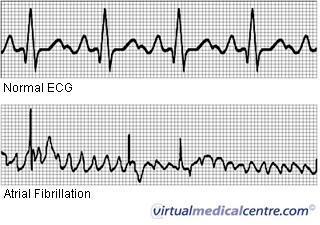
Atrial fibrillation (AF or A-fib) is the most common cardiac arrhythmia which is the condition of irregular heartbeat  Our heartbeats follow a periodic cycle and any irregularity in that cycle causes very critical problems. AF may be asymptomatic in some cases which means it does not present any symptoms, but it is often associated with palpitations, fainting, chest pain, or congestive heart failure. 

The major problem with AF is that it increases the risk of stroke; the degree of stroke risk can be up to seven times that of the average population, depending on the presence of additional risk factors (such as high blood pressure). It may be identified clinically when taking a pulse, and the presence of AF can be confirmed with an electrocardiogram (ECG or EKG) which demonstrates the absence of P waves together with an irregular ventricular rate (P waves are present as the small peak just before the longer peak in the ECG curve).

The main goals of treatment are to prevent circulatory instability and stroke. The rate or rhythm control are used to achieve the former, while anticoagulation is used to decrease the risk of the latter. Now new technologies like Catheter- Ablation have been developed which help in controlling the rhythm of the heartbeat. It is an invasive procedure used to remove a faulty electrical pathway from the hearts of those who are prone to developing cardiac arrhythmias such as atrial fibrillation.

In catheter ablation, one or more thin, flexible wires, called catheters are inserted into a blood vessel (usually the groin) and guided into the heart. Each catheter has two or more electrodes to measure the heart's electrical signals as they travel from one chamber to another. RF catheter is inserted into a blood vessel and guided into the heart to pinpoint the source of the abnormal electrical signals. These catheters used to deliver a low-voltage, high-frequency current that destroys the heart tissue responsible for the arrhythmia. Majority of the patients who have undergone catheter ablation experience either: 
  1. return to normal heart rhythm,
  2. long term reduction in the number of episodes of arrhythmia and the severity of symptoms.
This means that medicines for controlling heart rate or rhythm may be stopped or reduced following successful catheter ablation.

Catheter Ablation

Apollo Hospitals Chennai is the first hospital in the country to get the latest 3D mapping technology in arrhythmia management. The latest technology [CARTO 3 System] gives the three-dimensional view of the patient' s heart which helps the Electrophysiologist to identify the site of origin of the abnormal rhythm accurately and deliver the Radiofrequency catheter ablation therapy with high success rate.
The benefits of the curative catheter ablation therapy are mentioned below.
  • Better Quality of Care: Most cardiac arrhythmias can be treated and cured by catheter ablation thereby eliminating the need for life-long therapy.
  • Better Quality of Life: Catheter Ablation can restore the quality of life of the patient leading to a happier family life and improved productivity at workplace.
  • Saves Lives: Some life-threatening Ventricular Arrhythmias can be successfully treated with catheter ablation thereby providing patients with an option to live.
  • Cost-effective : The overall lifecycle costs of care for the patient may be reduced due the curative nature of catheter ablation therapy. Alternative device therapies can be more than five times costlier.
  • Catheter ablation is considered safe and is not associated with a significant risk, so the chance of experiencing complications is low. And it is a keyhole procedure which allows the patient to get back to their work soon after the procedure.


Read more ...

Scientists stealing plant's energy

Sunday, May 12, 2013
Plants have a very efficient mechanism for converting solar energy to chemical energy and using it for production of sugars and carbohydrates required by them. Scientists have been trying to build a similar mechanism for along time now but couldn't achieve such efficiency. So finally, they have build a mechanism to steal plant's energy produced during photosynthesis.

Scientists working in the field of nano-sciences at University of Georgia, have developed a mechanism to that allows them to capture the energy plants create during photosynthesis, and turn it into electricity that can power the human world. The study was published in Energy and Environmental Science journal.

In the process of photosynthesis, plants use sunlight to split water molecules into hydrogen and oxygen, releasing electrons in this process. These electrons are used by plants to produce carbohydrates from carbon-di-oxide gas and energy. Calkins, Umasankar and their team of scientists at University of Georgia, have tried to capture these electrons and utilize them for energy production. These electrons can be captured and transferred through a pipe in the form of electricity. 


They have used spinach thylakoids immbolizied on the carbon nanotubes, where thylakoids capture electrons and carbon nanotubes help to transfer them. They were able to obtain a maximum current density of 68 μA cm−2 and a steady state current density of 38 μA cm−2, which are two orders of magnitude larger than previously reported for similar systems. 

This is just a starting point for developing highly efficient mechanism for energy production. The carbon based nanostructured electrode has the potential to serve as an excellent immobilization support for photosynthetic electrochemistry based on the molecular tethering approach as demonstrated in this work. Also, further work is required  to stabilize the photosynthesis process so that electrons can be captured from them without harming the plant growth. 
Read more ...

Saturn: Rain Over Me!

Friday, April 12, 2013

A new study by scientists at University of Leicester, England, reveals that the Saturn's rings cause rain of charged water particles into its atmosphere. The study, whose observations were funded by NASA reveals that the rain falls over a large portion which influences the composition and temperature structure of parts of Saturn's upper atmosphere. The paper appears in this week's issue of the journal Nature.

Image credit: NASA/JPL-Caltech/Space Science Institute/University of Leicester

“Saturn is the first planet to show significant interaction between its atmosphere and ring system," said James O’Donoghue, the paper's lead author and a postgraduate researcher at Leicester. “The main effect of ring rain is that it acts to 'quench' the ionosphere of Saturn. In other words, this rain severely reduces the electron densities in regions in which it falls."

O’Donoghue explains that the ring's effect on electron densities is important because it explains why, for many decades, observations have shown those densities to be unusually low at certain latitudes on Saturn. The study also helps scientists better understand the origin and evolution of Saturn's ring system and changes in the planet's atmosphere.

Read more ...