AIRE Concept: Converting Passive Human Energy to Electricity!

Saturday, June 29, 2013
I recently came across the TEDxgateway event which was held in Mumbai in December 2012 partnered by the Franklin Templeton Investments. For those of you unfamiliar with TED, let me introduce you to TED. TED is a nonprofit organisation devoted to Ideas Worth Spreading. It started out in 1984 as a conference bringing together people from three worlds: Technology, Entertainment, Design. Since then its scope has become ever broader. Basically it provides a platform to the young generation to present their innovative ideas in making the world a better place to live in.


Some of you might be familiar with the TED Talks video site which shows the award winning innovations by young researchers - some of the researches are so simple yet so brilliantly effective! You'll end up wondering why didn't I think of this before! There is also a TED annual prize for the most innovative research of the year.


So, back to where I started - This year the Franklin Templeton Investments partnered the TEDxgateway event in December 2012. I was just watching the videos of the speakers in the event and was hugely inspired by their ideas that I couldn't resist telling the world about it through my blog and doing my bit in spreading the young innovations that we need now.

João Lammoglia, 27, provided a brilliant concept about human energy. We all are living in a techno-savy world where 90% of our work is dependent upon gadgets - be it your laptop, tab, or smart phone! recently, our smart phones have replaced the need of any other gadgets as they provide us with almost all the facilities and features we require and keeps us in touch with millions at once by the help of super-fast internet. However, here lies the catch - it runs on electricity. 

Electricity is one of our most treasured resources. Imagine living even a day -24 hours- without electricity and I can assure you it will be worst than a nightmare. When internet isn't working due to some technical problems, I can't even decide what to do with my laptop! :O But this electricity doesn't come cheap! The electricity sector in India had an installed capacity of 225.133 GW as of May 2013, the world's fifth largest. Captive power plants generate an additional 34.444 GW. Non Renewable Power Plants constitute 87.55% of the installed capacity and 12.45% of Renewable Capacity (Link). 


It is unsustainable to be using the non-renewable sources forever and besides, they are too harmful for the environment.The major contributor of non-renewable energy are coal based power plants and the extraction of coal from buried fossil fuels is literally catastrophic for the surroundings. We can always shift to renewable power like solar energy ad wind energy, but the problem is India doesn't have the strong solar efficiency or wind potential. 

We need a different solution - for which we have immense potential and which provides large amount of energy. 

Joao Lammoglia provided us with one such innovative idea - AIRE concept. AIRE is a mask that converts wind energy (provided by the wearer’s breath) into electricity for the recharging of small electronic devices by the use of small wind turbines. It uses the passive energy of the human power. We've seen several charging devices emerge in recent years that harness kinetic energy to power mobile devices, but this is the first we've come across that actually uses human respiration to power a gadget. Designer João Paulo Lammoglia won a Best of 2011 RedDot Design Award for the AIRE mask. The mask can be used while sleeping, reading or exercising, according to the description.


Mobile phones are small devices, but they can have a pretty significant environmental impact, creating as much as 1 metric ton of CO2 per year – so anything you can do to curb your energy use is of course a good thing. “Besides saving energy (and contributing to environmental preservation), it also encourages the practice of physical exercise,” writes Lammoglia in the product description. “Its energy is available twenty-four hours a day, seven days a week.”


Franklin Templeton Investments partnered the TEDxGateway Mumbai in December 2012. (video)


I think using human power is a very innovative idea - my mental energy can be used to charge a gadget - already in love with the idea! :D It's my turn to do my bit for the environment. :)

This post is a part of The Idea Caravan contest organised by Franklin Templeton Investments and IndiBlogger.
Read more ...

Wood Batteries: A Green Substitute to Lithium batteries

Friday, June 21, 2013
Sodium-ion batteries are a type of reusable battery that uses sodium-ions as a way to store power in a compact system. This type of battery is still in a developmental phase but is forecasted to be a cheaper, more durable way to store energy than commonly used lithium-ion batteries. Lithium-ion batteries are common in consumer electronics as they are one of the most popular types of rechargeable battery for portable electronics, with one of the best energy densities, no memory effect, and only a slow loss of charge when not in use.

Currently lithium-ion batteries are the preferred portable battery as after approximately 50 cycles most sodium-ion batteries tend to store only about 50% of original capacity. However, lithium batteries maintain their capacity. As lithium is in short supply, whereas sodium is much more abundant and also environment-friendly, it would greatly lower the price of the product if the modern day batteries were switched over to a sodium-ion cell.


Scientists at University of Maryland have designed a ‘green’ battery using a sliver of wood covered with tin. The various parts in the battery are a thousand times slimmer than a paper piece. They used wood fibers, which are apt for storing liquid electrolytes, allow the sodium-ion battery to keep going for more than 400 charging cycles.


It is being said that the wood fibers, which are soft and mesoporous, can be set up as a new platform for a budget sodium ion battery.

The study was published in journal Nano Letters.

Read more ...

Environment's Mania!

Friday, June 7, 2013
Like every year, your FaceBook news-feed would be flooded with Happy Environment day's messages - cool status from everyone showing how caring they are for the environment, how they wore green today, special senti messages about the environment. They are good to cause awareness, but, in reality, how much do we actually do for our environment -NOTHING!


There isn't much of work if you really try to do something -your little bit - for the planet. There are simple things which don't even interfere with your comfort. I have given a short list of 10 points only to help you get ideas:
  1. Don't waste water in your home - like while shaving, brushing , turn the tap off when you don't need water.
  2. In office and colleges, use both sides of paper when taking a printout. In case of official used papers which are printed only on one side, you can use the back side for some rough work.
  3. Start taking your own mug with you for tea, coffee.
  4. Disconnect your phone charger when not using it. If it seems more convenient to let it be plugged in, then at least switch off the plug.The same goes for appliances like microwave oven, hair straightener, etc.
  5. Use cloth napkins instead of paper napkins.
  6. Try to use recyclable materials rather than disposables as much as possible.
  7. If not a tree, then may be a few plants at home would be a great idea for decor as well as the pollution control.
  8. Carry a cloth bag/jute bag for grocery shopping instead of getting things in a plastic bag or paper bag! (Paper bag is as harmful as plastic ones as for making paper bags you still need to cut tress, and after one use it becomes crumbled or torn)
  9. Installing CFLs instead of tube lights saves on energy as well as reduce your electricity bill.
  10. Check energy rating when buying new appliances.
The best policy as one of my professors taught me is , "3 'R's - Reduce, Recycle, Reuse".
 
Here's a list of 50 ways to help the planet in simple ways - http://www.50waystohelp.com/
 
Leaving you with an CNN-IBN initiative to save the Western Ghats!
 
 
Read more ...

Moss recovered from beneath Canadian Glaciers!

Tuesday, May 28, 2013
Canadian scientists have discovered moss buried beneath the Canadian Arctic Teardrop glaciers as the glacier started melting. They tried to revive this moss by growing in a laboratory and the moss generated new stems. 

This moss is believed to have been buried beneath the glaciers during the little ice age between 1550 to 1850 AD. There have been three  main incidents of ice age on Earth - first began in 1650, second in 1770, and third in 1850. The ice ages are believed to have been caused by either a drop in solar radiation, volcanic activity, changes in the ocean circulation or drops in the human population.

Moss obtained from Canadian glaciers, revived by the scientists in the laboratory

The glaciers have started melting due to global warming. Glaciers in the Canadian arctic region have been melting at around four metres each year, for the past nine years. This melting of glaciers could lead to reviving the vegetation in the arctic region as has been the course by the moss.

The moss had survived in dormant state for over 400 years in the cold surroundings of a glacier. However, as soon as favourable conditions - nutrient supply, sunlight, water availability - were made available to it, it regained its growth pattern. This finding can have great implication on our global temperature change as if the mosses can revive under favourable conditions, they may lead to succession to higher species of plants. This would further lead to greening the arctic region.

As I earlier described in my post, Arctic to get greener, "The greener belt would lead to increase in global warming which is contrasting to the popular belief that tree cover leads to reduction in global warming effects. This is because of the albedo effect, which means that a part of the total solar radiation received by Earth is reflected back to the outer space by the snow cover of the Arctic and the clouds. Now with the increasing greenery of the Arctic, the snow will melt, thus leading to higher radiation reaching the Earth's surface and warming it up. This will lead to further increase in the Earth's temperature which will in turn lead to melting of more ice cover. "

Read more ...

Giving Heartbeats: Modern Healthcare touching lives!

Friday, May 17, 2013
Modern healthcare is really touching our lives these days. Due to the upcoming advances in technology and instrumentation, we are able to save a large number of lives. Also, the average life expectancy has increased due to better medical facilities which are helping to cure the previously untreatable diseases by the discovery of new drugs. Also, the attempt is to reduce the treatment costs so that everyone is able to afford the treatments. One such disease I am going to talk about is Atrial Fibrillation

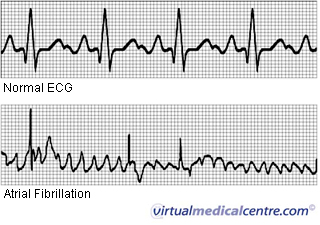
Atrial fibrillation (AF or A-fib) is the most common cardiac arrhythmia which is the condition of irregular heartbeat  Our heartbeats follow a periodic cycle and any irregularity in that cycle causes very critical problems. AF may be asymptomatic in some cases which means it does not present any symptoms, but it is often associated with palpitations, fainting, chest pain, or congestive heart failure. 

The major problem with AF is that it increases the risk of stroke; the degree of stroke risk can be up to seven times that of the average population, depending on the presence of additional risk factors (such as high blood pressure). It may be identified clinically when taking a pulse, and the presence of AF can be confirmed with an electrocardiogram (ECG or EKG) which demonstrates the absence of P waves together with an irregular ventricular rate (P waves are present as the small peak just before the longer peak in the ECG curve).

The main goals of treatment are to prevent circulatory instability and stroke. The rate or rhythm control are used to achieve the former, while anticoagulation is used to decrease the risk of the latter. Now new technologies like Catheter- Ablation have been developed which help in controlling the rhythm of the heartbeat. It is an invasive procedure used to remove a faulty electrical pathway from the hearts of those who are prone to developing cardiac arrhythmias such as atrial fibrillation.

In catheter ablation, one or more thin, flexible wires, called catheters are inserted into a blood vessel (usually the groin) and guided into the heart. Each catheter has two or more electrodes to measure the heart's electrical signals as they travel from one chamber to another. RF catheter is inserted into a blood vessel and guided into the heart to pinpoint the source of the abnormal electrical signals. These catheters used to deliver a low-voltage, high-frequency current that destroys the heart tissue responsible for the arrhythmia. Majority of the patients who have undergone catheter ablation experience either: 
  1. return to normal heart rhythm,
  2. long term reduction in the number of episodes of arrhythmia and the severity of symptoms.
This means that medicines for controlling heart rate or rhythm may be stopped or reduced following successful catheter ablation.

Catheter Ablation

Apollo Hospitals Chennai is the first hospital in the country to get the latest 3D mapping technology in arrhythmia management. The latest technology [CARTO 3 System] gives the three-dimensional view of the patient' s heart which helps the Electrophysiologist to identify the site of origin of the abnormal rhythm accurately and deliver the Radiofrequency catheter ablation therapy with high success rate.
The benefits of the curative catheter ablation therapy are mentioned below.
  • Better Quality of Care: Most cardiac arrhythmias can be treated and cured by catheter ablation thereby eliminating the need for life-long therapy.
  • Better Quality of Life: Catheter Ablation can restore the quality of life of the patient leading to a happier family life and improved productivity at workplace.
  • Saves Lives: Some life-threatening Ventricular Arrhythmias can be successfully treated with catheter ablation thereby providing patients with an option to live.
  • Cost-effective : The overall lifecycle costs of care for the patient may be reduced due the curative nature of catheter ablation therapy. Alternative device therapies can be more than five times costlier.
  • Catheter ablation is considered safe and is not associated with a significant risk, so the chance of experiencing complications is low. And it is a keyhole procedure which allows the patient to get back to their work soon after the procedure.


Read more ...

Scientists stealing plant's energy

Sunday, May 12, 2013
Plants have a very efficient mechanism for converting solar energy to chemical energy and using it for production of sugars and carbohydrates required by them. Scientists have been trying to build a similar mechanism for along time now but couldn't achieve such efficiency. So finally, they have build a mechanism to steal plant's energy produced during photosynthesis.

Scientists working in the field of nano-sciences at University of Georgia, have developed a mechanism to that allows them to capture the energy plants create during photosynthesis, and turn it into electricity that can power the human world. The study was published in Energy and Environmental Science journal.

In the process of photosynthesis, plants use sunlight to split water molecules into hydrogen and oxygen, releasing electrons in this process. These electrons are used by plants to produce carbohydrates from carbon-di-oxide gas and energy. Calkins, Umasankar and their team of scientists at University of Georgia, have tried to capture these electrons and utilize them for energy production. These electrons can be captured and transferred through a pipe in the form of electricity. 


They have used spinach thylakoids immbolizied on the carbon nanotubes, where thylakoids capture electrons and carbon nanotubes help to transfer them. They were able to obtain a maximum current density of 68 μA cm−2 and a steady state current density of 38 μA cm−2, which are two orders of magnitude larger than previously reported for similar systems. 

This is just a starting point for developing highly efficient mechanism for energy production. The carbon based nanostructured electrode has the potential to serve as an excellent immobilization support for photosynthetic electrochemistry based on the molecular tethering approach as demonstrated in this work. Also, further work is required  to stabilize the photosynthesis process so that electrons can be captured from them without harming the plant growth. 
Read more ...

Saturn: Up, Close and Personal!

Sunday, April 28, 2013
All you astronomy freaks, take out you telescope and be prepared. Saturn is gonna be closest to Earth tomorrow. ICTMN reported that this is the closest Saturn has been to Earth in six years (putting it at about 746 million miles away, as opposed to one billion at its farthest), and a small telescope—even a cheapo department-store find, according to NASA—will net you your very own glimpse.


Saturn's bright rings!

Saturn is in what’s known as opposition. This means that the sun, Earth and Saturn are aligned, with Earth in the middle—opposite the sun, in other words—and tilted at just the right angle for us to ogle its breathtaking rings. So this weekend, when the sun sets in the west, Saturn will rise in the east, and when the sun is farthest below the horizon, Saturn will reach its highest point above the horizon.

"The first impulse people have when they see Saturn for the first time is to say it is fake," said MacRobert, who writes the weekly column "This Week's Sky at a Glance." "It is almost too much of an icon. We've seen the image of that planet with the rings since we were kids, and to see the real thing -- some people can't believe it's real."

Read more: Saturn: Rain over Me!
Read more ...